Being a money nerd is OK by me
March 6, 2026

March 6, 2026
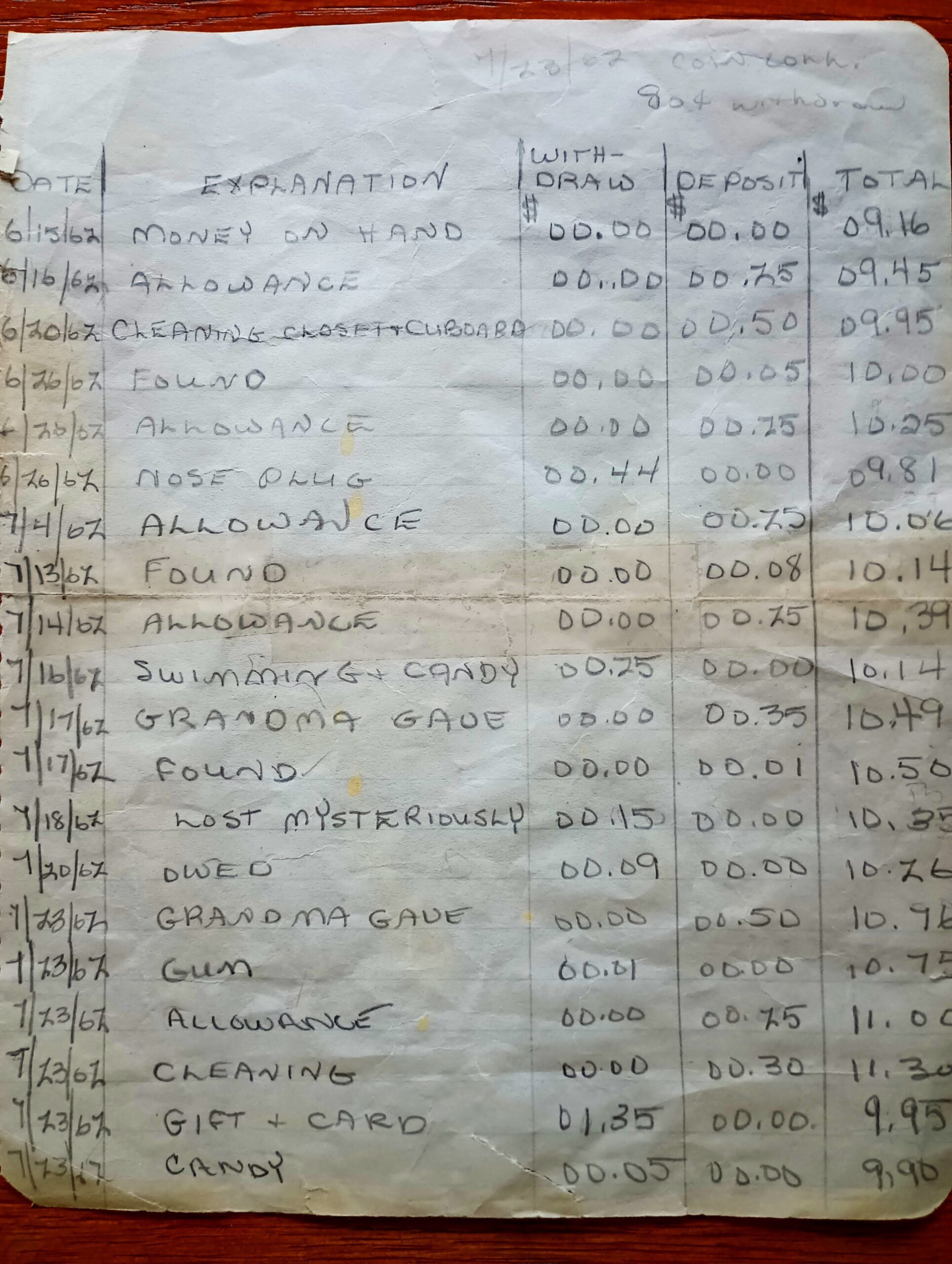
It all began when I was 12 years old, and my mom showed me how to record ‘money in’ and ‘money out’. And one page of that early notebook tracker still exists today. See image below…and remember that a 25₵ weekly allowance was pretty good back in the early 1960s!
So, when I happened to meet the founder of SecureFutures, Lloyd Levin, almost 19 years ago, the organizational mission he described immediately resonated with me. And I wanted to know more.
That was the beginning of my journey sharing my ‘savings nerd-ness’ with teens across the greater Milwaukee area. The first time I taught a Money Sense program, I was fortunate to have a more experienced program volunteer from Educator’s Credit Union by my side…even though we were being taped by a local media outlet for an upcoming news story. (Talk about trial by fire.) But after that first experience in front of a classroom, I was ‘all in.’
In the ensuing time, I’ve served as a board member for seven years, supported the early small SecureFutures staff with PR and marketing consultation and the writing of newsletters, donation appeals, the first organizational video, development of the MoneySmart Life Smart tagline, and more. I was also a member of the committee planning the very first Investment Conference (and the first to have the nerve-racking job of advancing the PowerPoint slides for all speakers!).
But nothing rises to the satisfaction level of standing in front of a classroom of high school juniors and seniors for several weeks in a row – whether for a Money Sense or Money Coach program – and finally seeing the lightbulbs turn on in their heads. The growing awareness as they begin to understand the future impact of learning how to track spending, analyze whether what they want to buy is a need or a want, the importance of paying themselves first, and the value in setting life goals and making a budget designed to help achieve them.
It reminds me of when my dad took me to his bank in downtown Wauwatosa to open my first savings account. I was probably around the same age as when my mom showed me how to record earnings and spending. I no longer remember where the seed money for that account came from, or recall the account opening process, but I can recall as plain as day the two of us walking out of the bank. I am holding open and reveling in amazement and pride at the page in my passbook showing my first-ever savings balance.
Not long after that, my mom also showed me her “envelope” system of money management. After cashing my dad’s paycheck, carefully planned amounts went into appropriate envelopes – whether it was money for groceries or gasoline that week, or partial monthly amounts for something like car insurance so all the money would be there by the time the bill was due.
Thanks to both my mom and my dad, I learned about money early in life!
It’s hard to imagine a more important contribution to society than helping today’s teens learn the same lessons I was taught. Teaching teens to recognize the difference between “needs” and “wants” spending. Paying themselves first to achieve their goals. Understanding the difference between interest earned and interest paid. Learning how to responsibly manage credit.
And so much more. I can’t even count the times a classroom teacher observing the lessons has commented, “I sure wish I’d had this information when I was in high school!” Or the stories we hear when students tell us they shared what they learned with parents or siblings, who then started making changes in how they, too, manage their money.
I’m also extremely proud that SecureFutures has been at the forefront of the effort to get a semester of financial education to be a graduation requirement in all Wisconsin schools. That mandate goes into effect soon!
Since becoming involved with SecureFutures, I’ve always believed we can make communities much stronger with financially healthy residents who can afford to own homes, save money for further education… whether college or apprentice programs, enjoy the security of their own rainy-day/emergency savings, plus be able to afford marriage, children, vacations, and more.
This is the background, and these are the beliefs I bring as a volunteer standing in front of students. I have weathered my own financial ups and downs over the years…divorce, ad agency layoffs…but I knew how to manage my money to survive every setback. And return financially stronger than ever.
I tell every class, “I never want you to have to lie awake in bed at night wondering how you’ll get an upcoming bill paid or weather a financial setback. Today you’ll start to learn the tools that I hope will always help you sleep soundly.”